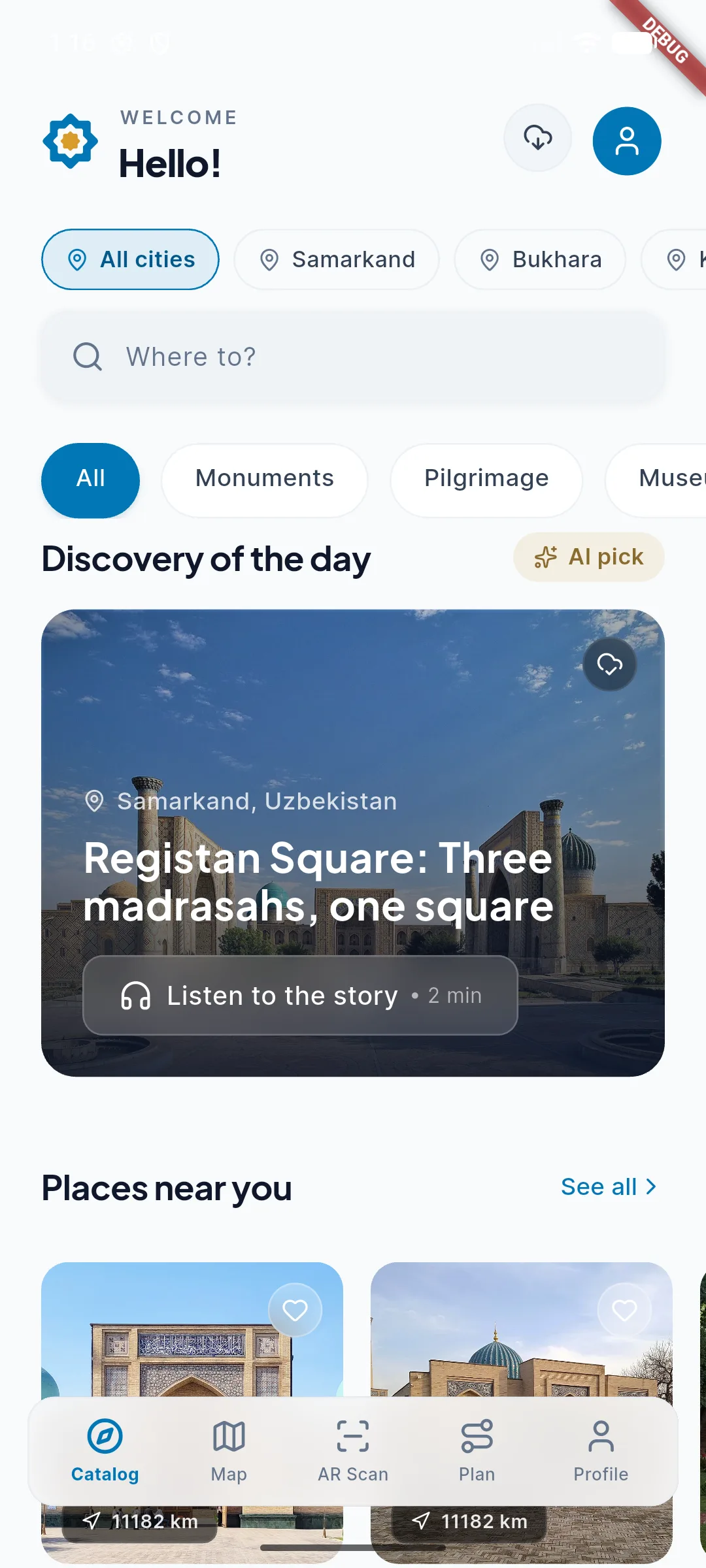
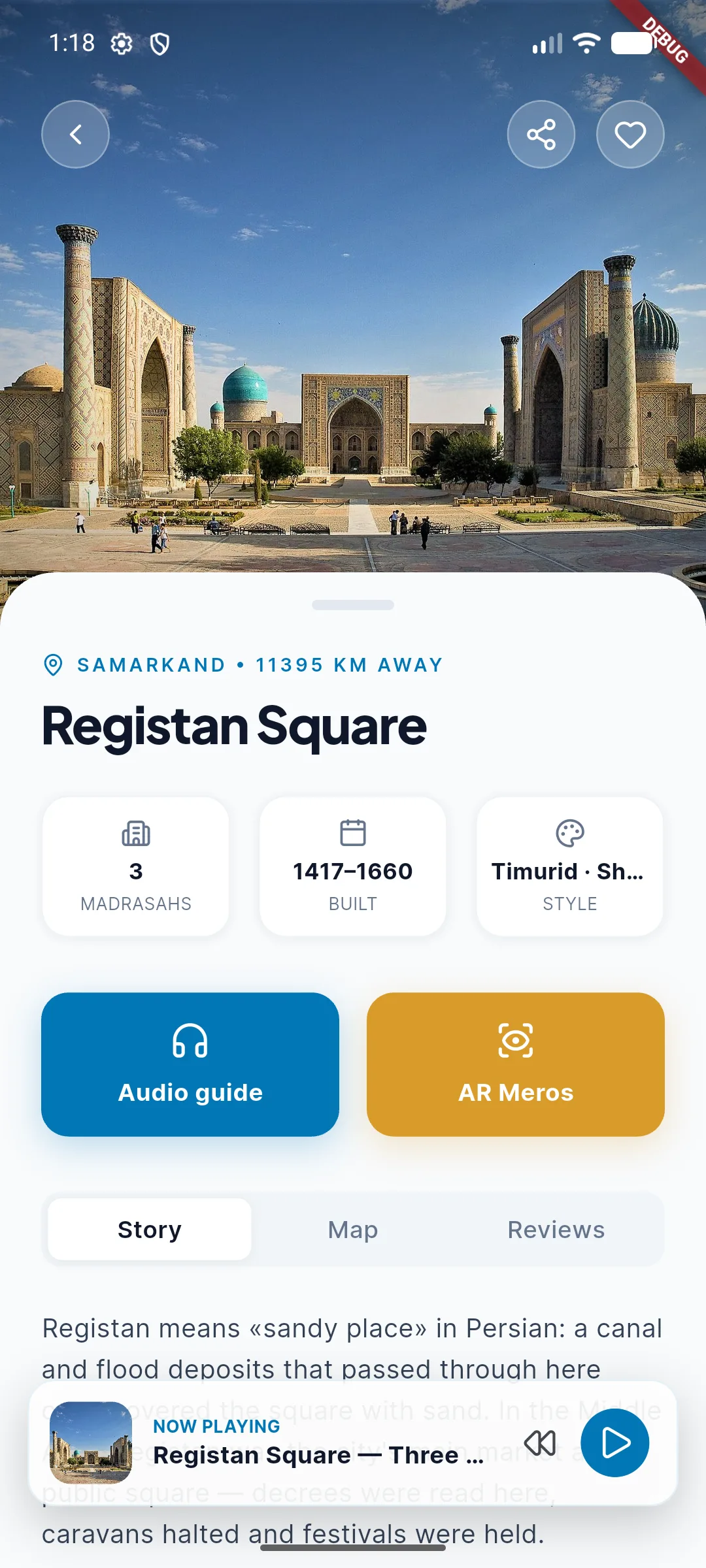
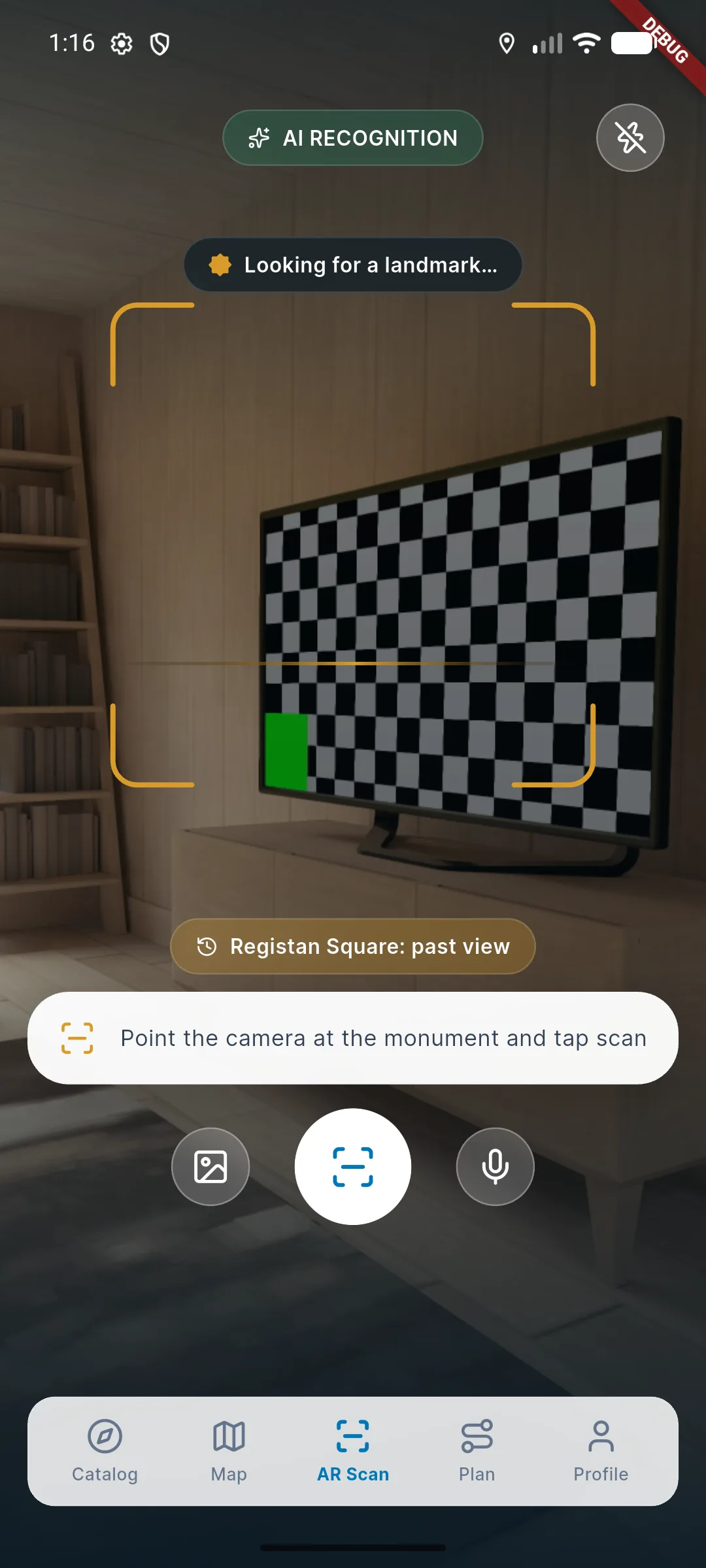
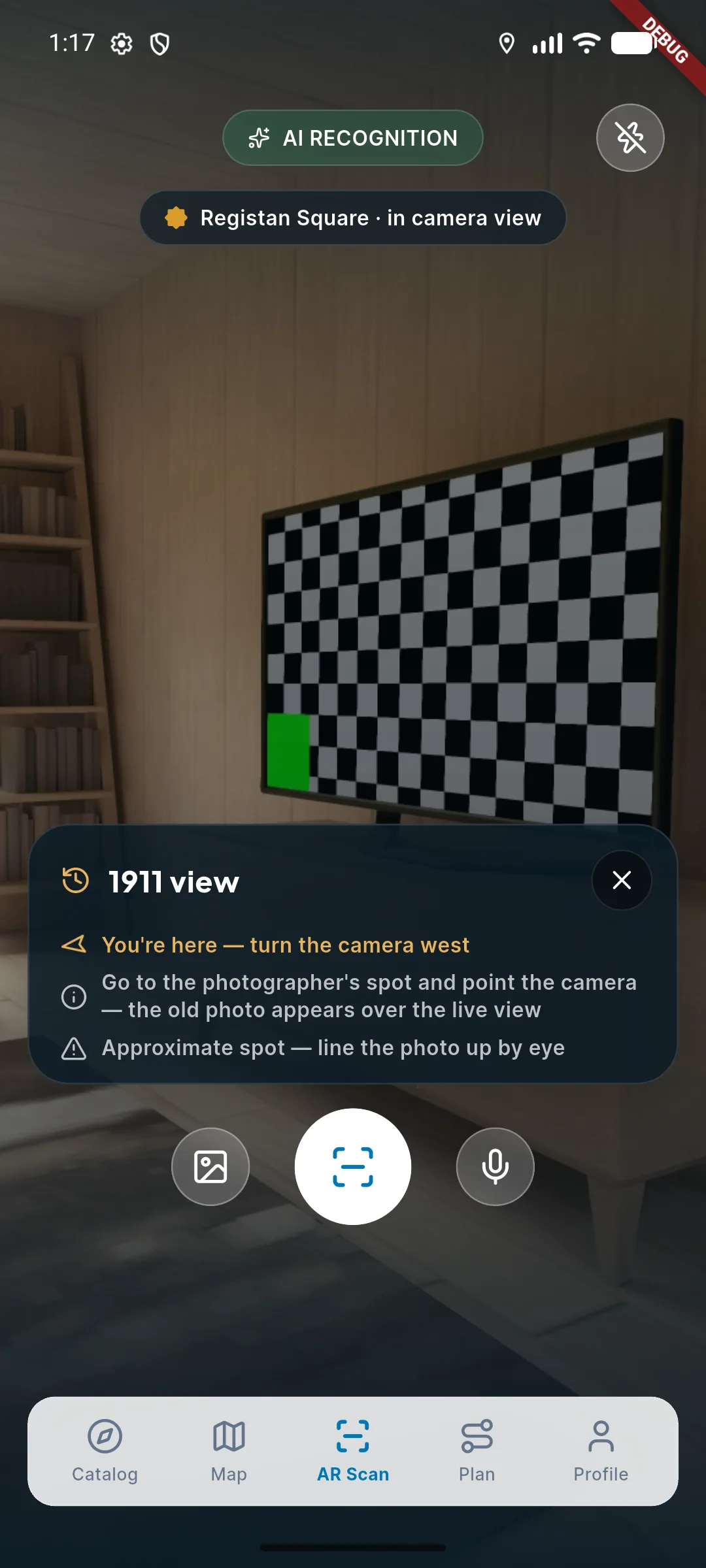
The problem
A tourist standing in front of the Registan has a phone with no signal and a generic chatbot that will happily invent dates. A guide app for Central Asian heritage needed three things nobody had put together: it must work offline, it must only say what reviewed sources say, and it must work in Uzbek, Russian, English, Indonesian and Arabic.
What I built
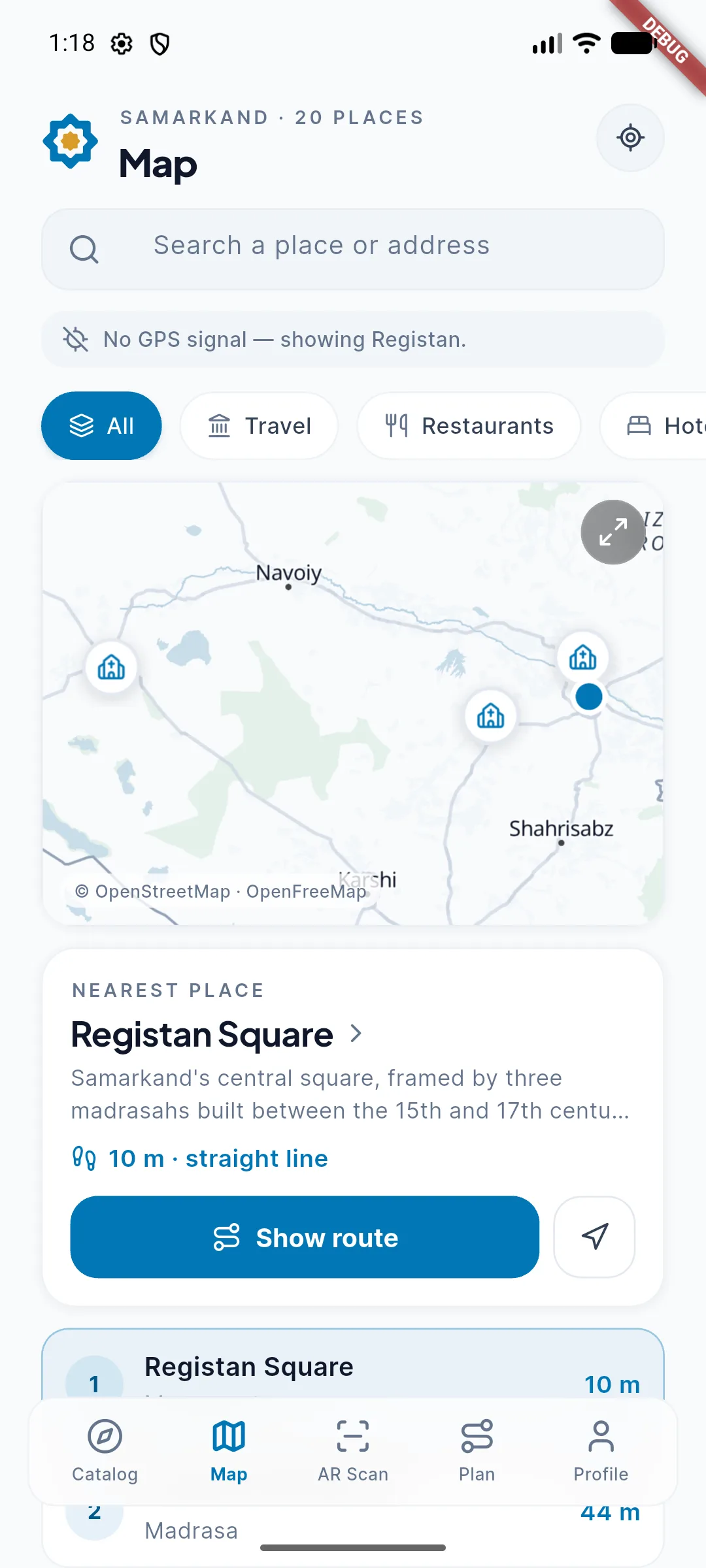
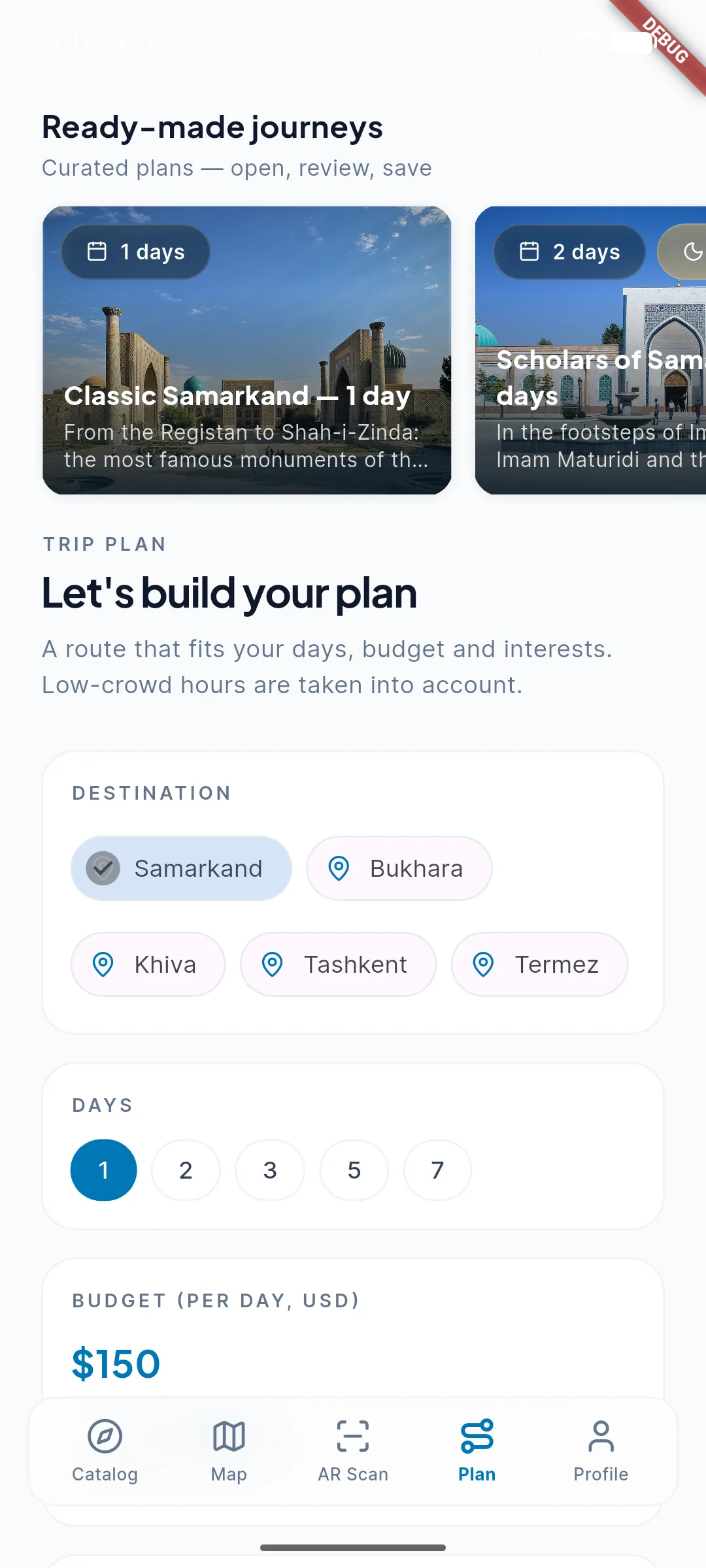
- Offline-first mobile app (Flutter) reusing the sync core from LM-CRM, but designed offline-first
from the first migration: outbox, idempotency, delta sync, in-place resync on language switch
(
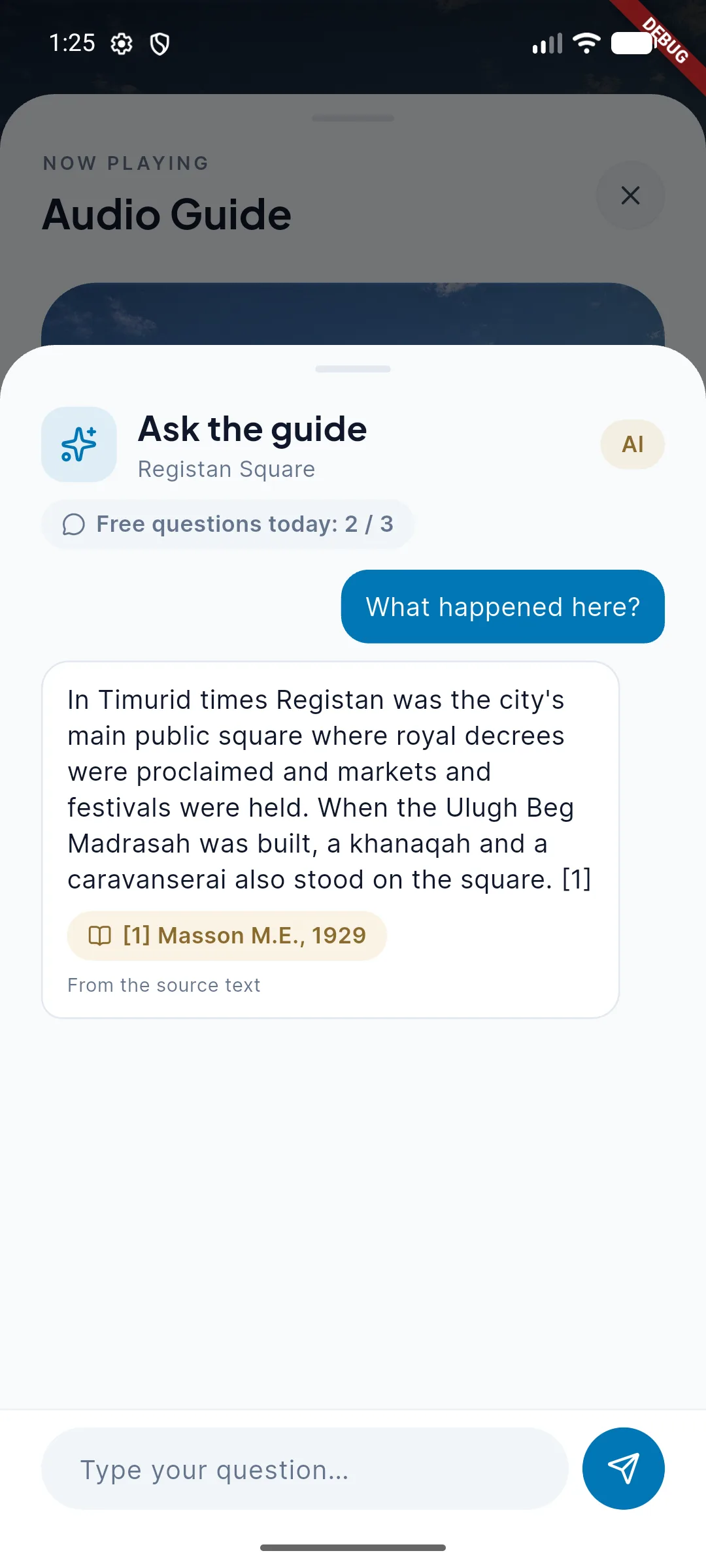
upsertIds+pruneExceptinstead of cache wipes — 35 s → 7 s). - AI that fails safely. RAG question answering with citations (pgvector + embeddings, keyword
fallback). Monument identification from photo + GPS where the model only chooses from a closed
candidate list within 5 km and places elements from a closed list with bounding boxes — it never
writes user-facing text. Confidence below 0.5 → “not sure”. Strict JSON-schema outputs, daily cost
caps per IP/device, typed
LLMUnavailableon refusal or truncation. Every test passes without an API key. - Multi-tenant backend with PostgreSQL row-level security, explicit write-authorisation helpers separate from read filters, idempotent mutating endpoints, uniform error bodies with a retry policy.
- Content pipeline. Source-tracked content with licences, a review workflow (draft → reviewed → published), a validator before seeding, neural TTS with chapter marks, and an Uzbek text-normalisation study: 233 Roman-numeral/decimal/initial cases in a 106k-character corpus, fixed with a 44-test module and verified with a TTS→STT round trip.
- Testing as a product requirement. A layout matrix renders every screen at 5 sizes × 2 font scales × 5 locales and fails on any overflow; an RTL guard forbids direction-specific icons; an l10n test checks key parity across 5 languages.
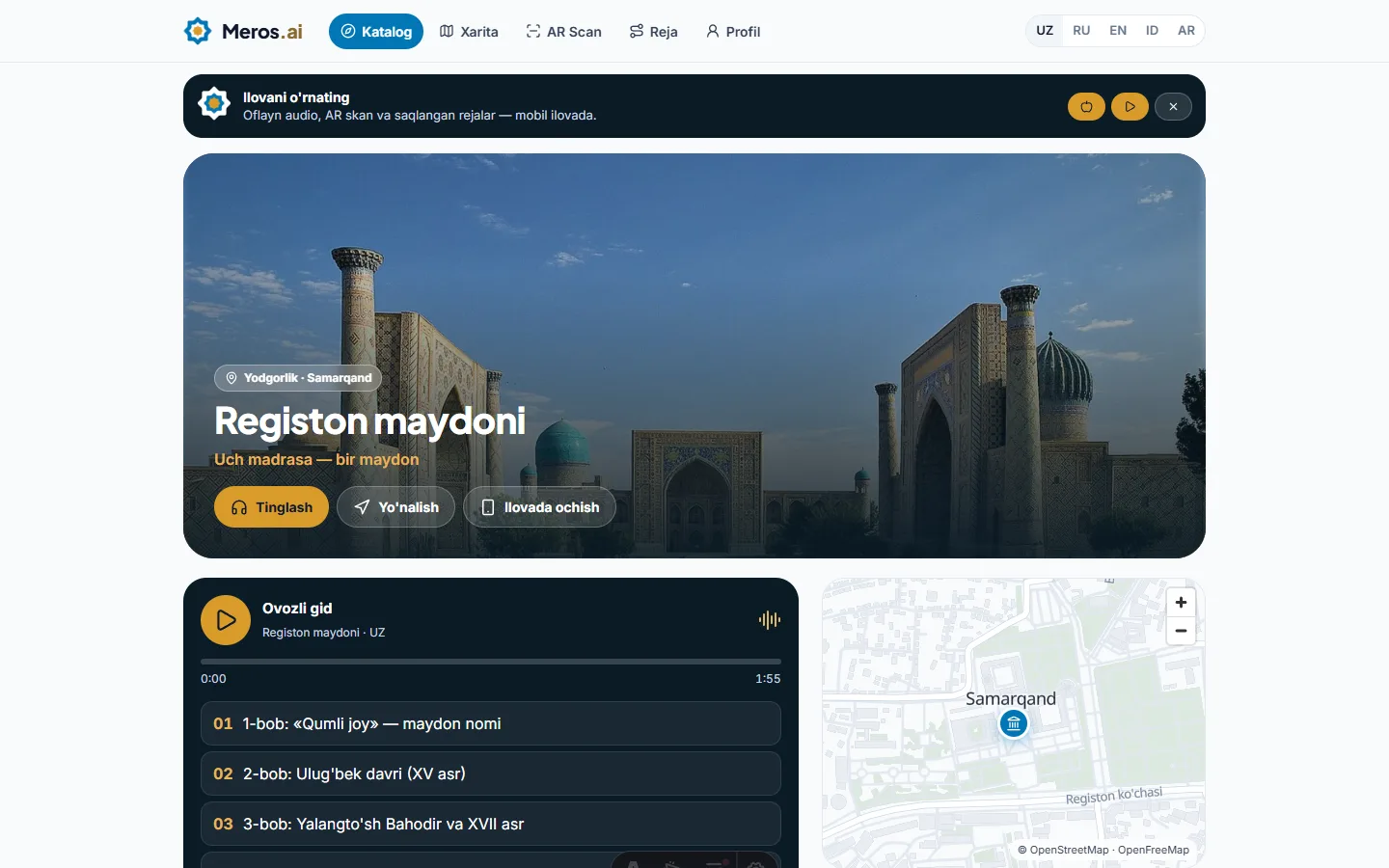
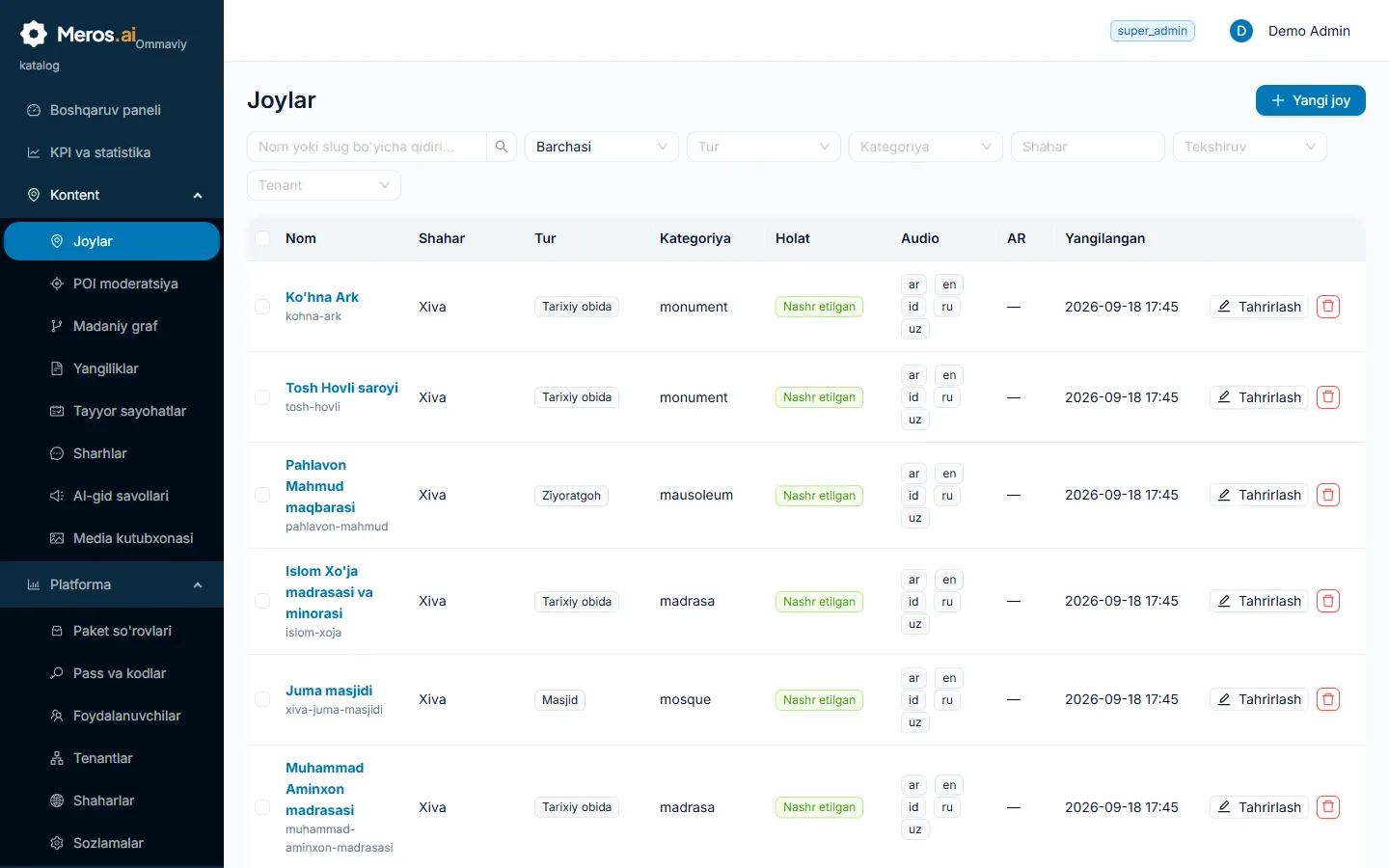
- Plus: React admin CMS, Astro SEO web version, Docker/Caddy production stack with backups and a runbook.
Where it stands
After the code was done I did the competitor analysis I should have done first. The state-run tourism platform covers booking, guides and tickets; two apps already promise AR and audio guides. Feature breadth is not a moat, so Meros does not compete there: it sells no bookings or tickets and is offered to tour operators, museums and hotels as a B2B licence — batches of pass codes, their own brand, usage statistics — with a focus on languages where human guides are scarce (Indonesian, Arabic).
Stage: MVP. The product works end to end, but it is not in the stores yet and has not been tested with real users. It is submitted to UzCombinator; the next step is a pilot with one to three tour operators in Samarkand, plus historian review of the content and native-speaker review of the Indonesian and Arabic translations.
What carries over
The offline sync core, the multi-tenant API, the CMS, auth with email codes and biometrics, and the deploy stack — a foundation I now reuse. And a rule: one day of market research before three weeks of code.